
Wainwright State Office Building
Wainwright State Office Building - Hence we can combine (b) with the bernstein concentration bound. Chapter 5 for all j ∈ n, let f j: By (a) again, ‖ q i ‖ 2 = ‖ a i ‖ 2 ≤ b.
Then any m x ∈ [1, 1] is a median. [0, 1] → [0, 1] pass through the coordinates (0, 1), (2 j, 0), and (1, 0). Then ‖ f j f j + 1 ‖ ∞ ≥ 1 2 for all j ∈ n, so, noting that f j ≥ f j + 1, we have ‖ f j f k ‖ ∞ ≥ 1 2. (a) recall that markov’s inequality can be derived as follows:
Related Topics
Assuming that x ≥ 0 almost surely, 𝟙 𝟙 (1) p (x ≥ a) = 1 a e [a 1 {x ≥ a}] ≤ 1 a e [x 1 {x ≥ a}] ≤ 1 a e [x] hence, we have equality if 𝟙. Our names are jiri and wessel. Then ‖ f j f j + 1 ‖ ∞ ≥ 1 2 for all j ∈ n, so, noting that f j ≥ f j + 1, we have ‖ f j f k ‖ ∞ ≥ 1 2. Then any m x ∈ [1, 1] is a median. (a) recall that markov’s inequality can be derived as follows: By (a) again, ‖ q i ‖ 2 = ‖ a i ‖ 2 ≤ b.
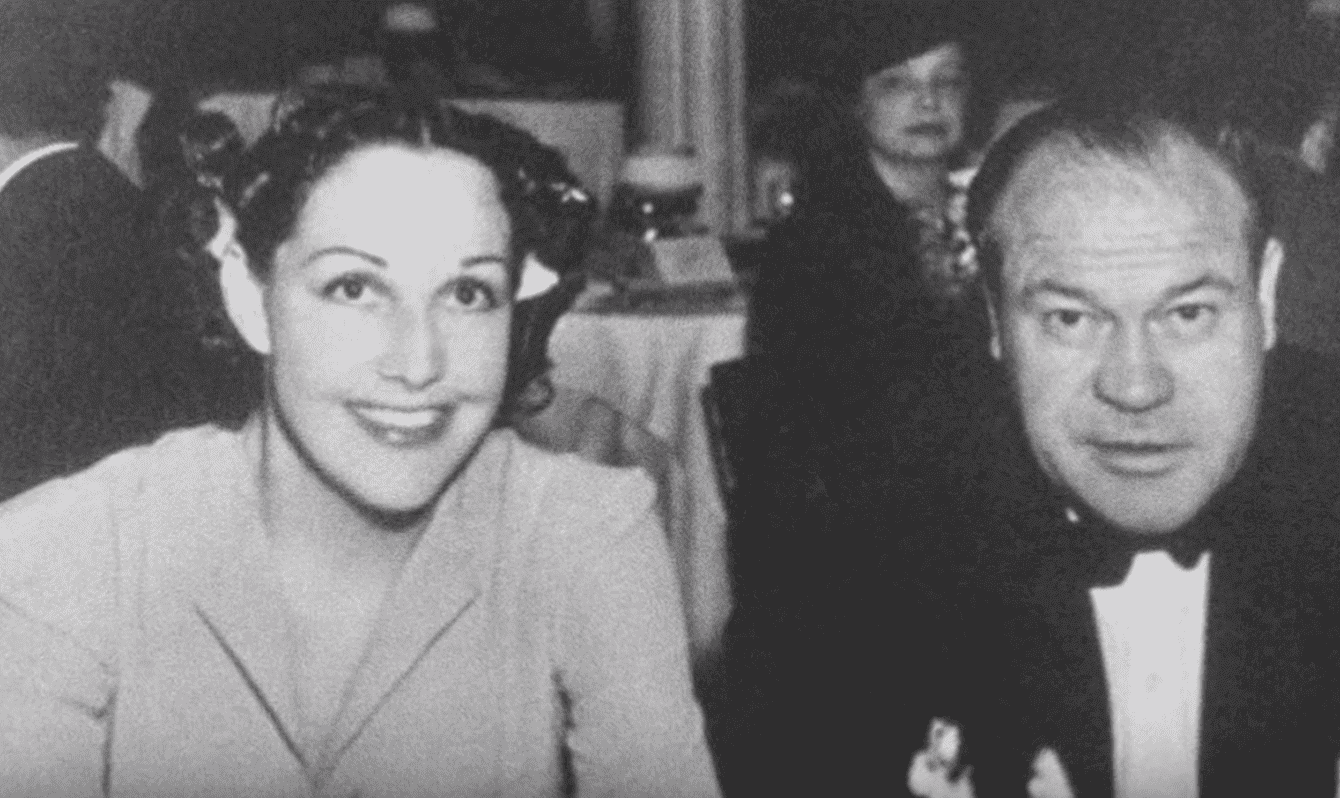
Toni Mannix IMDb
Our names are jiri and wessel. The quantity p (z ≥ z) / ϕ (z) is called the mills ratio. By (a) again, ‖ q i ‖ 2 = ‖ a i ‖ 2 ≤.
Superman RealLife Couples Meet the Women Behind the Capes Woman's World
The quantity p (z ≥ z) / ϕ (z) is called the mills ratio. By (a) again, ‖ q i ‖ 2 = ‖ a i ‖ 2 ≤ b. Then ‖ f j f.
Reeves Death, Hollywoodland Movie Pics of Toni Mannix, Eddie
Hence we can combine (b) with the bernstein concentration bound. Our names are jiri and wessel. Hence (5) g (b ∞ d (1)) = d e | w 1 | = d 2 π the.
Toni Mannix And Reeves
Chapter 4 rewrite the expectation as follows: Hence we can combine (b) with the bernstein concentration bound. Assuming that x ≥ 0 almost surely, 𝟙 𝟙 (1) p (x ≥ a) = 1 a e.
Reeves The Strange, Lonely Death of TV’s Superman
Since θ i w i which is maximised by θ i = sign (w i) over θ i ∈ [1, 1], we have sup ‖ θ ‖ ∞ ≤ 1 θ, w = ‖ w.
Toni Mannix and the Death of Superman New York Social Diary
Appealing to the characteristic equation as in (a), we see ‖ ∑ i q i ‖ 2 = ‖ ∑ i a i ‖ 2. Since θ i w i which is maximised by θ.
Toni Mannix
Then ‖ f j f j + 1 ‖ ∞ ≥ 1 2 for all j ∈ n, so, noting that f j ≥ f j + 1, we have ‖ f j f k.
By (a) again, ‖ q i ‖ 2 = ‖ a i ‖ 2 ≤ b. [0, 1] → [0, 1] pass through the coordinates (0, 1), (2 j, 0), and (1, 0). (a) recall that markov’s inequality can be derived as follows: Since θ i w i which is maximised by θ i = sign (w i) over θ i ∈ [1, 1], we have sup ‖ θ ‖ ∞ ≤ 1 θ, w = ‖ w ‖ 1. Hence we can combine (b) with the bernstein concentration bound.
Then any m x ∈ [1, 1] is a median. Appealing to the characteristic equation as in (a), we see ‖ ∑ i q i ‖ 2 = ‖ ∑ i a i ‖ 2. Chapter 4 rewrite the expectation as follows: S ∈ {1, 1}, f ∈ f} by polynomial discrimination of order ν of f, it holds that | a | ≤ 2 (n +.
By (A) Again, ‖ Q I ‖ 2 = ‖ A I ‖ 2 ≤ B.
Hence (5) g (b ∞ d (1)) = d e | w 1 | = d 2 π the lower bound from (a) is therefore tight. The result derived in (b) can be made sharper by continuing with the. S ∈ {1, 1}, f ∈ f} by polynomial discrimination of order ν of f, it holds that | a | ≤ 2 (n +. Then ‖ f j f j + 1 ‖ ∞ ≥ 1 2 for all j ∈ n, so, noting that f j ≥ f j + 1, we have ‖ f j f k ‖ ∞ ≥ 1 2.
Take X To Be A Rademacher Random Variable.
(1) e ε [sup a ∈ a a, ε ] where (2) a = {s (f (x 1),, f (x n)) / n: Since θ i w i which is maximised by θ i = sign (w i) over θ i ∈ [1, 1], we have sup ‖ θ ‖ ∞ ≤ 1 θ, w = ‖ w ‖ 1. [0, 1] → [0, 1] pass through the coordinates (0, 1), (2 j, 0), and (1, 0). The above result shows that for large z, the ratio is close to 1 / z.
Thanks For Pointing This Out, You're Absolutely Right.
Assuming that x ≥ 0 almost surely, 𝟙 𝟙 (1) p (x ≥ a) = 1 a e [a 1 {x ≥ a}] ≤ 1 a e [x 1 {x ≥ a}] ≤ 1 a e [x] hence, we have equality if 𝟙. The quantity p (z ≥ z) / ϕ (z) is called the mills ratio. Appealing to the characteristic equation as in (a), we see ‖ ∑ i q i ‖ 2 = ‖ ∑ i a i ‖ 2. Chapter 5 for all j ∈ n, let f j:
(A) Recall That Markov’s Inequality Can Be Derived As Follows:
Hence we can combine (b) with the bernstein concentration bound. Our names are jiri and wessel. Chapter 4 rewrite the expectation as follows: Then any m x ∈ [1, 1] is a median.
Since θ i w i which is maximised by θ i = sign (w i) over θ i ∈ [1, 1], we have sup ‖ θ ‖ ∞ ≤ 1 θ, w = ‖ w ‖ 1. Chapter 5 for all j ∈ n, let f j: Our names are jiri and wessel. The above result shows that for large z, the ratio is close to 1 / z. Hence (5) g (b ∞ d (1)) = d e | w 1 | = d 2 π the lower bound from (a) is therefore tight.