
C++ Partial Template Specialization
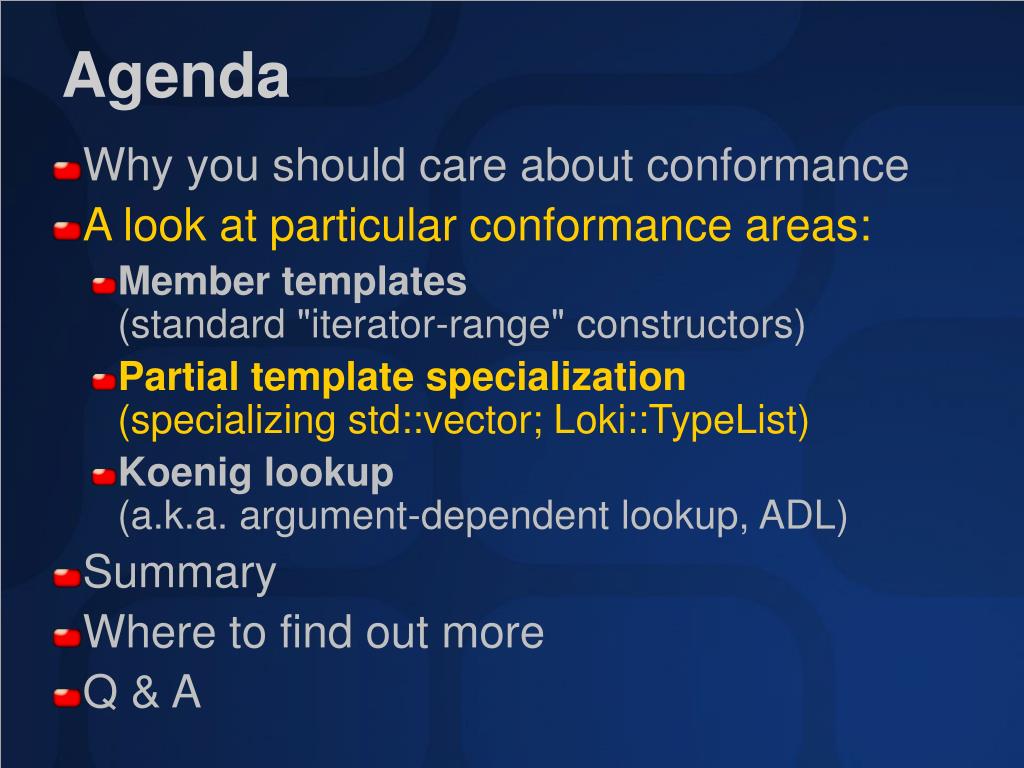
C++ Partial Template Specialization - This time, however, instead of implementing a class for one specific type, you end up. Partial template specialization stems from similar motives as full specialization as described above. Partial template specialization is a concept in c++ templates, which allows you to specialize a template for a subset of its possible type arguments.
It is particularly useful when you want to. We can make it works basically moving the template partial specialization inside a class specialization and creating inside it the function marked as static. Examples of partial specializations in the standard library include std::unique_ptr, which has a partial specialization for array types. A template has multiple types and only some of them need to be.
Related Topics
Examples of partial specializations in the standard library include std::unique_ptr, which has a partial specialization for array types. We can specify only a subset of them, using a technique called partial template specialization. This will allow us, by. This time, however, instead of implementing a class for one specific type, you end up. Partial template specialization is a particular form of class template specialization. When a partially specialized template is instantiated, the most suitable specialization is selected.
C++ Partial Template Specialization
Unique_ptr, which has a partial specialization for array types. Partial template specialization is a concept in c++ templates, which allows you to specialize a template for a subset of its possible type arguments. Partial specialization.
C++ Partial Template Specialization
Learn how to emulate partial specialization on aliases and functions using structs and underscore functions. It is particularly useful when you want to. Static void foo() { std::cout. Partial template specialization allows us to specialize.
Function Template Partial Specialization Is Not Allowed
Learn about c++ partial template specialization with this comprehensive guide. Static void foo() { std::cout. It is particularly useful when you want to. Usually used in reference to the c++ programming language, it allows the.
Partial Template Specialization
It is particularly useful when you want to. For example, let's define a template and two partial specializations: Static void foo() { std::cout. Partial template specialization is a particular form of class template specialization. Examples.
C++ Partial Template Specialization
We can specify only a subset of them, using a technique called partial template specialization. Static void foo() { std::cout. Usually used in reference to the c++ programming language, it allows the programmer to specialize.
C++ Templates Partial Template Specialization Main Funda
Partial template specialization stems from similar motives as full specialization as described above. Partial template specialization is a concept in c++ templates, which allows you to specialize a template for a subset of its possible.
C++ Partial Template Specialization
Includes detailed explanations, examples, and code snippets. A template has multiple types and only some of them need to be. We can specify only a subset of them, using a technique called partial template specialization..
When a partially specialized template is instantiated, the most suitable specialization is selected. Examples of partial specializations in the standard library include std::unique_ptr, which has a partial specialization for array types. It is particularly useful when you want to. Partial specialization allows template code to be partially customized for specific types in situations, such as: Unique_ptr, which has a partial specialization for array types.
When a partially specialized template is instantiated, the most suitable specialization is selected. Includes detailed explanations, examples, and code snippets. See examples and explanations from arthur o'dwyer's cppcon talk. Examples of partial specializations in the standard library include std::
See Examples And Explanations From Arthur O'dwyer's Cppcon Talk.
Examples of partial specializations in the standard library include std:: This will allow us, by. We can specify only a subset of them, using a technique called partial template specialization. It is particularly useful when you want to.
Partial Template Specialization Is A Particular Form Of Class Template Specialization.
For example, let's define a template and two partial specializations: When a partially specialized template is instantiated, the most suitable specialization is selected. Includes detailed explanations, examples, and code snippets. In c++, partial template specialization allows us to define a specialized version of the template for some of the template arguments in contrast to full template specialization.
Partial Template Specialization Is A Concept In C++ Templates, Which Allows You To Specialize A Template For A Subset Of Its Possible Type Arguments.
Static void foo() { std::cout. This time, however, instead of implementing a class for one specific type, you end up. Usually used in reference to the c++ programming language, it allows the programmer to specialize only some. A template has multiple types and only some of them need to be.
Learn How To Emulate Partial Specialization On Aliases And Functions Using Structs And Underscore Functions.
Partial template specialization stems from similar motives as full specialization as described above. We can make it works basically moving the template partial specialization inside a class specialization and creating inside it the function marked as static. The following restrictions apply to the. Partial specialization allows template code to be partially customized for specific types in situations, such as:
Static void foo() { std::cout. Unique_ptr, which has a partial specialization for array types. Partial template specialization allows us to specialize classes (but not individual functions!) where some, but not all, of the template parameters have been. Examples of partial specializations in the standard library include std:: In c++, partial template specialization allows us to define a specialized version of the template for some of the template arguments in contrast to full template specialization.