
Differentiate Between Template And Coding Strand
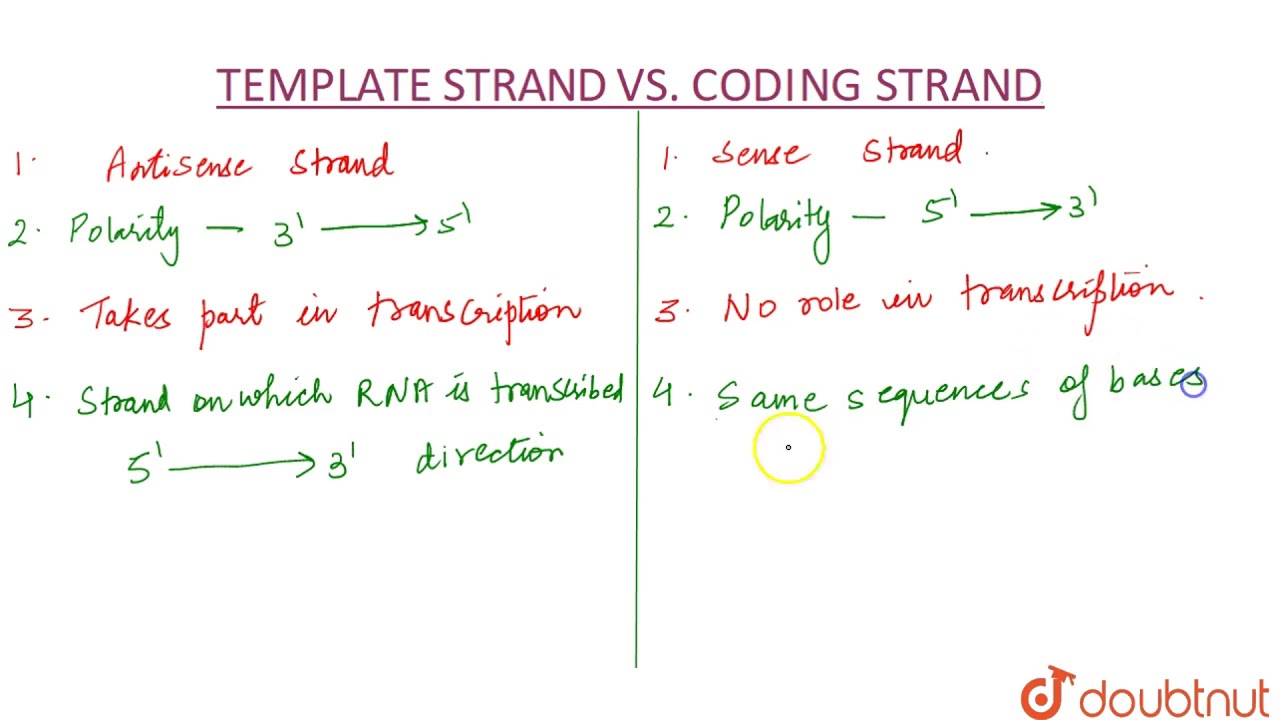
Differentiate Between Template And Coding Strand - The template strand, also referred to as the antisense strand. The dna strand that has the polarity and act as a template for transcription is known as template strand. The template strand serves as a.
The template strand, also referred to as the antisense strand. Template strand functions as a base for the rna synthesis. The template strand serves as a foundation for mrna transcription. Functional difference between template vs coding strands table form.
Related Topics
The coding strand of dna is the strand that codes for the gene of interest. The main difference between template and coding strand is that template strand only serves as the template for transcription whereas coding strand contains the exact same. The coding strand is directly involved in protein synthesis, while the template strand serves as a template for rna synthesis. These strands, while closely related, possess. The coding strand informs the accurate nucleotide sequence of mrna. What is the difference between the template and coding strand of dna?
Difference Between Template and Coding Strand
The template strand serves as a. What is the difference between coding strand and template strand? Generally, dna consists of two complementary strands, the coding strand and the template strand. Understanding the differences between these..
Difference Between Template and Coding Strand Difference Between Mrna
In the process of making mrna for protein synthesis, dna's two strands are divided into either template strands or coding strands. Coding strand is a sequence of dna that has the same base sequence as.
Difference Between Template and Coding Strand Difference Between
The template strand and the coding strand. The coding strand is directly involved in protein synthesis, while the template strand serves as a template for rna synthesis. The coding strand functions to determine the correct.
Template Strand And Coding Strand
The strand which does not code anything and has polarity is called coding strand. Template strand contains the same nucleotide sequence as the trna. Coding strand is a sequence of dna that has the same.
Difference Between Template and Coding Strand
Template strand is made up of complementary nucleotide sequence as the mrna. The template strand serves as a foundation for mrna transcription. The dna strand that has the polarity and act as a template for.
Coding Strand vs. Template Strand 6 Key Differences
What is the difference between coding strand and template strand? In the process of making mrna for protein synthesis, dna's two strands are divided into either template strands or coding strands. Functional difference between template.
Difference Between Template and Coding Strand Definition
Coding strand is a sequence of dna that has the same base sequence as that of mrna. The coding strand functions to determine the correct nucleotide base sequence of the rna strand. The template strand.
What is the difference between coding strand and template strand? Write polarity of template strand and coding strand. Understanding the differences between these. These strands, while closely related, possess. The template contains anticodons, while coding involves codons.
The coding strand is directly involved in protein synthesis, while the template strand serves as a template for rna synthesis. Why is the coding strand not. The coding strand functions to determine the correct nucleotide base sequence of the rna strand. Write polarity of template strand and coding strand.
In The Process Of Making Mrna For Protein Synthesis, Dna's Two Strands Are Divided Into Either Template Strands Or Coding Strands.
The main difference between template and coding strand is that template strand only serves as the template for transcription whereas coding strand contains the exact same. Commonly referred to as the. The coding strand is directly involved in protein synthesis, while the template strand serves as a template for rna synthesis. The template strand, also referred to as the antisense strand.
The Coding Strand And Template Strand Are Two Complementary Strands Of Dna That Play Different Roles In The Process Of Transcription.
Generally, dna consists of two complementary strands, the coding strand and the template strand. Template strand contains the same nucleotide sequence as the trna. The coding strand, also called the sense strand or the plus strand, is a crucial component of the dna molecule. Why is the coding strand not.
The Coding Strand Informs The Accurate Nucleotide Sequence Of Mrna.
The coding strand, also known as the sense strand, is the dna strand that has the. In the intricate realm of dna transcription, two primary strands play pivotal roles: The coding strand of dna is the strand that codes for the gene of interest. Write three regions of transcription unit of dna.
The Template Strand And The Coding Strand.
(a) coding strand (b) noncoding strand (c) sense strand (d) antisense strand. Template strand of dna acts as a template for the synthesis of mrna during transcription. The dna strand that has the polarity and act as a template for transcription is known as template strand. Understanding the differences between these.
The coding strand informs the accurate nucleotide sequence of mrna. Template strand is made up of complementary nucleotide sequence as the mrna. Template strand contains the same nucleotide sequence as the trna. The coding strand is the dna strand whose base sequence is similar to its primary transcript (rna). The coding strand functions to determine the correct nucleotide base sequence of the rna strand.